


Less guesswork, more support: How professors use Soomo Analytics

Kaylee Eberhardt

6 minutes
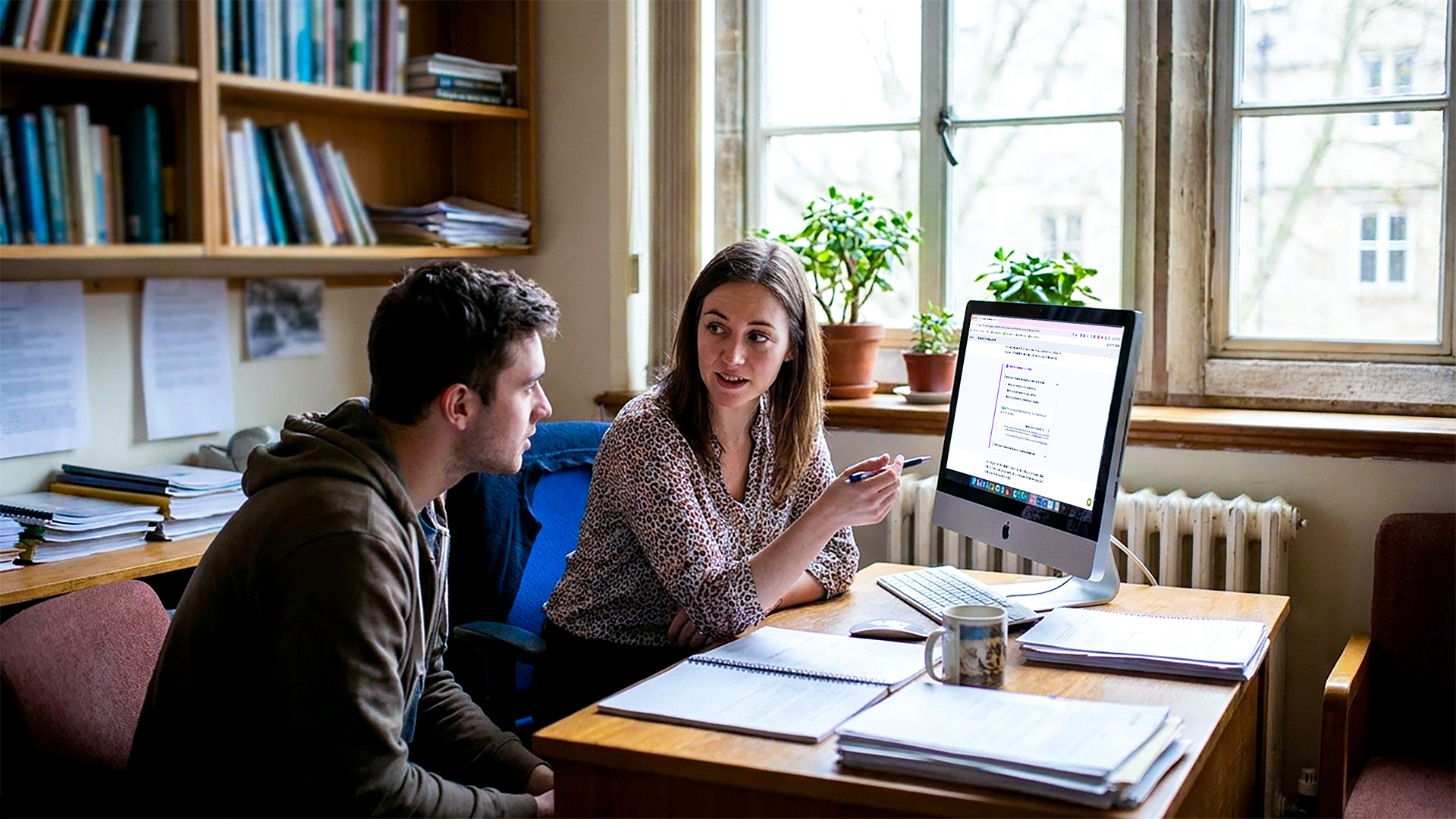
A student comes to your office hours or sends an anxious email right after an exam: “I really thought I understood the material, but my score is so low. I just don’t get what went wrong.”
Without any activity data, that conversation with the student might be layered with guesswork and troubleshooting. But for instructors using a Soomo webtext, the answer is right in front of them: “Well, you spent less than 10 minutes on this entire chapter.”
So how do Soomo webtexts equip instructors with these insights? It’s all made possible through our Analytics tool.
In the video below, author and professor Dr. Jocelyn Evans (University of West Florida) shows how she uses Analytics as a radar system to detect students who need extra support.
In this post, we’ll explore Analytics in more detail and hear from instructors like Jocelyn about how they use the tool to plan more effective class time, personalize feedback for students, and support learners when they need it most.
Analytics shows instructors who’s progressing and who’s falling behind
Unlike a passive PDF or an ebook that simply digitizes text on a screen, a Soomo webtext is an interactive learning resource that pairs reading material with low-stakes, autograded multiple-choice questions on every page. As students read and respond, Analytics collects and organizes that activity data in real time.
At a glance, instructors can see class averages alongside individual student metrics.
- Webtext progress: Keep track of which students did the reading and completed the questions.
- Score: See scores on embedded multiple-choice questions to spot misconceptions before they show up on exams.
- Time on page: Identify how much time each student spent on every page and each chapter as a whole.
Instead of waiting for a student to show up in office hours—or even fail a test—faculty can intervene early and make real-time, data-backed decisions that shape their outreach or use of class time.
Joshua Blank pinpoints individual needs in a 1,000-student lecture
Dr. Joshua Blank is a political science professor at The University of Texas at Austin and Research Director of the Texas Politics Project. He currently uses and contributes research to the development of our webtext Texas Politics.
I know exactly how long they’ve engaged, not only with each chapter in the textbook, but with each page in the textbook. I know when they last engaged with it. I know if they attempted the questions. I know what the class averages were, both for that chapter and for those pages.
In an online 1,000-student class, it’s easy for an individual student’s struggle to go unnoticed. With traditional course materials, gaining a clear picture of student engagement involves way more back-and-forth than a professor like Joshua might have time for. With Soomo’s Analytics, he can cut straight past that and address the root of the problem the moment an email lands in his inbox.
Kendra Murphy looks at weekly progress reports to spot skimming vs. studying
Dr. Kendra Murphy is a professor of sociology at University of Memphis. She currently uses our webtext Sociology: You Are Here (and served on the advisory board).
I know they just scrolled to the question, hit something random, and went on, and that maybe means that we need to talk about … what the purpose of the textbook is and how to learn better.
Automated Monday morning progress emails give Kendra a weekly check on student momentum. By comparing question scores with time spent on a page, she can see whether a struggling student spent adequate time on the reading or skimmed through a chapter to find and guess at questions. Having concrete data on hand turns grade conversations into practical guidance, helping her show students how to adjust their study habits.
Analytics saves Katrina Overby prep time and helps her focus in-class review
Dr. Katrina Overby is a communications professor at Rochester Institute of Technology, where she uses Public Speaking for Everyone, a webtext that guides students through their speech assignments.
If I have a bit more information about where [students] may be struggling, then I can help a bit more, and I do believe that the Analytics allowed for that.
Katrina uses webtext analytics as both a teaching guide and a time-saver. By checking embedded assignments and time-on-page reports before class, she can quickly pinpoint which concepts need extra review during class. Moving away from a traditional textbook to a centralized digital platform also simplified course logistics, making it easy to point students directly to specific readings or assessments when they need extra support.
When data takes the guesswork out of both teaching and webtext design, everyone wins
With a Soomo webtext, you know exactly how much of the class completed the reading and which concepts students are having trouble with.
And when a student reaches out to you saying, “I don’t understand why I’m doing so poorly,” you can pull up their individual activity details for an honest, productive discussion.
Instructors aren’t the only ones who benefit from Analytics. Our team at Soomo does too.
Behind the scenes, Analytics contributes to the continuous refinement and updating of our course materials. If we see students repeatedly stumbling over a specific multiple-choice question, our learning designers take a closer look. We might alter the question phrasing, clarify a distractor, or add extra context right on the page to help students grasp a challenging concept.
Curious to see what these insights look like in your discipline? Explore our webtext catalog or reach out to set up a demo with our team.


You may also like






Stay in touch

An error has occurred somewhere and it is not possible to submit the form. Please try again later or contact us.

Five main reasons to sign-up for our newsletter


